Menu Close

Tag: #uk365guy

{How to} use code interpreter on customer uploaded files in agent conversations in copilot studio

Hello Everyone,

Today I am going to share my thoughts on the use of the code interpreter on customer-uploaded files in agent conversations in copilot studio.
Let’s get started.

Your chatbot (agent) can take a user upload during a chat and automatically analyze it using code, then return results within the same conversation.

What actually happens behind the scenes

1. User uploads a file

Examples:

Excel (.xlsx)
CSV (.csv)
Sometimes JSON or text files.

2. The agent receives the file

The file is passed into the conversation as:

System.Activity.Attachments

3. Code Interpreter kicks in

Copilot Studio:

Generate Python code automatically

Runs it in a secure environment

Uses it to:
Read the file
Analyse data
Create outputs

4. The agent responds with results

The bot sends back:

Charts
Tablets
Insights
Summaries

Example flow:

Real example
User says:
“Analyze this sales spreadsheet”

What the agent does:
Reads the Excel file
Groups sales by month
Calculates totals
Generates a chart
Response:
“Revenue increased 18% in Q3. Here’s a breakdown…” + chart

Why this feature is useful
No manual coding needed
Works in real-time conversations
Turns your agent into a data analyst
Great for:
Customer uploads
Business reports
Data exploration

In one sentence
It lets your Copilot Studio agent act like a Python-powered data analyst that can read and analyze files users upload during chat.

Important notes
Best with structured data (Excel, CSV)
Requires:
File upload enabled
Code Interpreter enabled
Has file size and type limits

That’s it for today.

I hope this helps.

Malla Reddy Gurram aka @UK365GUY
Share this:

{Do you know}Evaluate test sets with multiple graders in Copilot Studio

Hello Everyone,

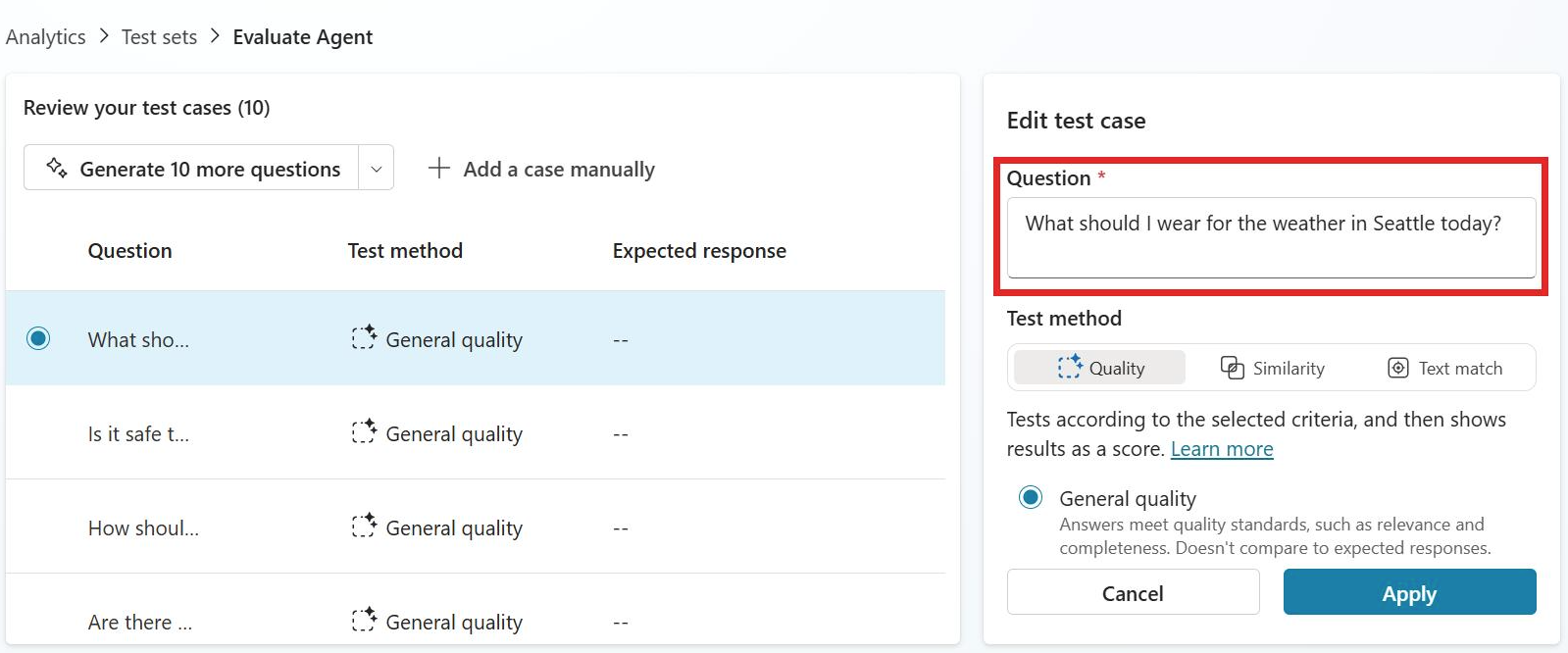
Today I am going to share my thoughts on the evaluation test sets with multiple graders in Copilot Studio.

Let’s get started.

Yes – Copilot Studio now supports evaluating a single test set with multiple graders in one run. This is listed as a Public preview in the 2025 release wave 2 plan, with availability starting February 8, 2026.

What it does:
You can attach several graders to the same test set, such as general quality, text similarity, and exact match.
Each grader can have its own pass criteria.
When you run the evaluation, Copilot Studio applies all selected graders to every test case in that run.
Results show up as separate columns per grader, plus an evaluation summary with aggregated results.

Why this helps:

You can assess different aspects of agent quality in one execution instead of rerunning the same test set multiple times.
Microsoft’s guidance also recommends combining multiple evaluation approaches rather than relying on a single grading method.

Related limits and setup:

Test sets can contain up to 100 test cases.
You can create test sets by generating them in Copilot Studio, importing a .csv or .txt file, writing cases manually, or using production data themes.

If you’re trying to use it in the product:

Go to your agent’s Evaluation page.
Create or open a test set.
Add multiple graders for the test.
Define pass thresholds for each grader.
Run the evaluation and compare the grader-specific result columns and summary.

That’s it for today.

I hope this helps.
Malla Reddy Gurram aka @UK365GUY
Share this:

{How to } Make Power Page Portal WCAG 2.1 Level A and AA Standards

Hello Everyone,

Today I am going to share my thoughts on how to make power pages portal according to the WCAG 2.1 Level A and AA Standards.

Let’s get started.

Making a Power Pages portal (from Microsoft’s Power Platform) compliant with WCAG 2.1 Level A and AA means addressing accessibility across design, content, and code. Power Pages gives you a solid starting point, but compliance depends on how you build and customise it.

Here’s a practical, structured way to get there:

1. Start with an Accessible Theme

Power Pages portals use templates (often based on Bootstrap).

Choose themes with good colour contrast

Avoid heavily customised UI that breaks semantic structure

Ensure responsive design (important for accessibility + zoom)

👉 Tip: Use tools like contrast checkers to meet 4.5:1 ratio (AA).

2. Use Proper HTML Semantics

WCAG relies heavily on structure.

Use correct heading hierarchy (h1 → h2 → h3)

Use semantic elements (

{How to }Make your copilot multilingual in Microsoft Copilot Studio

Hello Everyone,

Today I am going to show how to enable Microsoft Copilot Studio Multilingual.

Let’s get started.

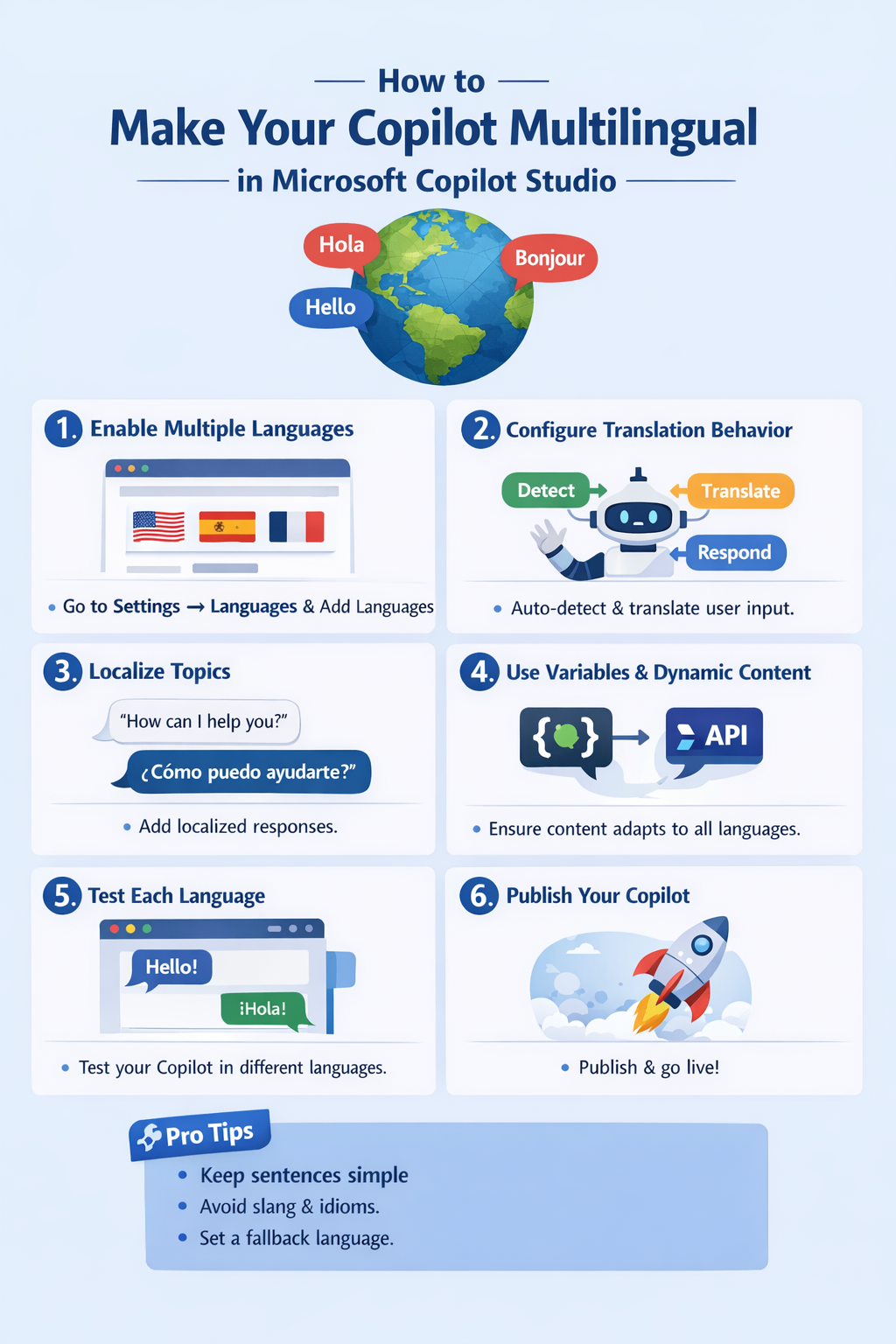
To make your Microsoft Copilot (created in Copilot Studio) multilingual, you can add secondary languages to your agent and localize its content.

1. Add Secondary Languages:

When you create an agent, it has one primary language. You can add more by following these steps in Microsoft Copilot Studio.

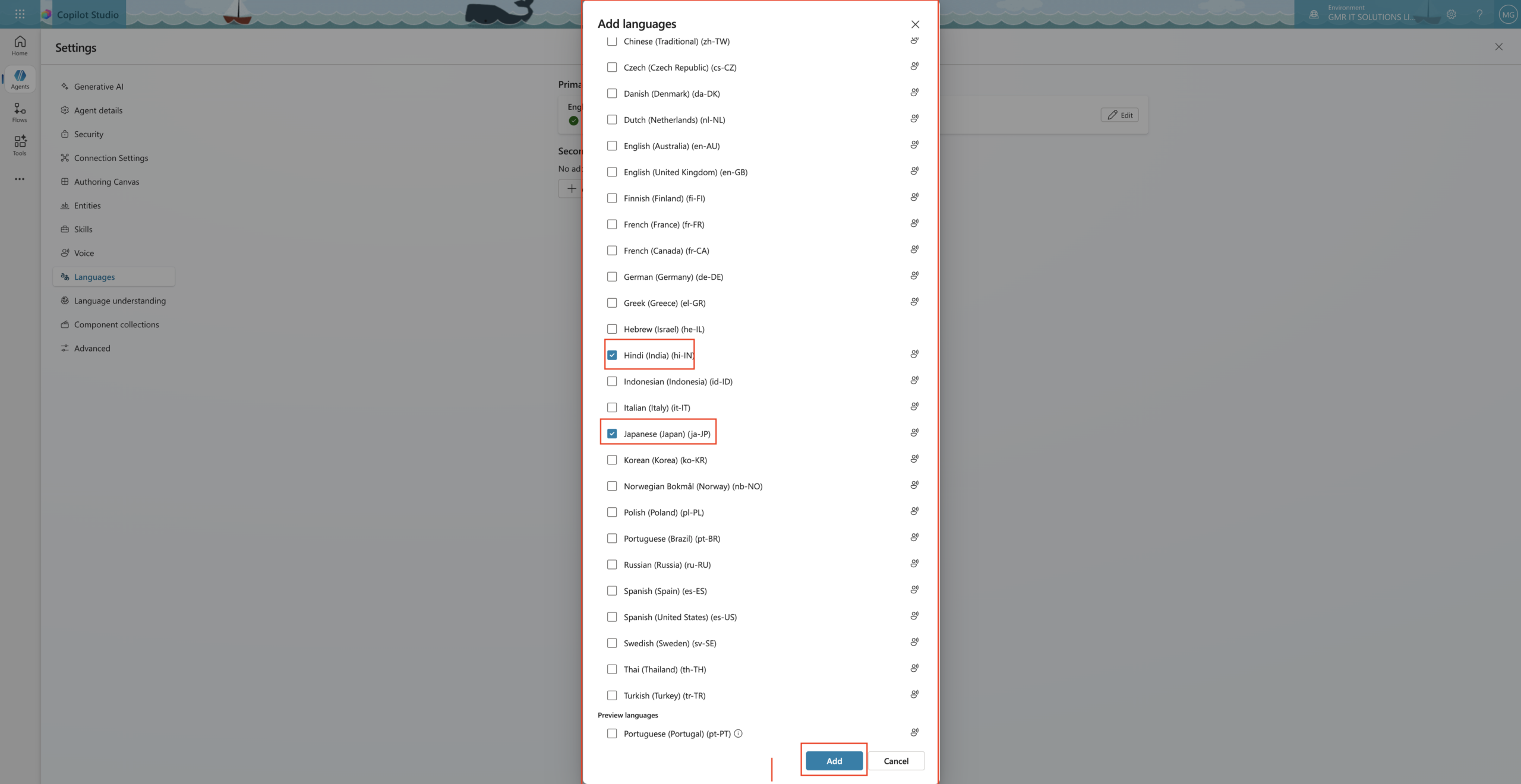
Open Settings: Go to the Settings page for your agent.
Select Languages: Click on the Languages tab.
Add Language: Select Add language, choose the languages you want from the list, and click add.
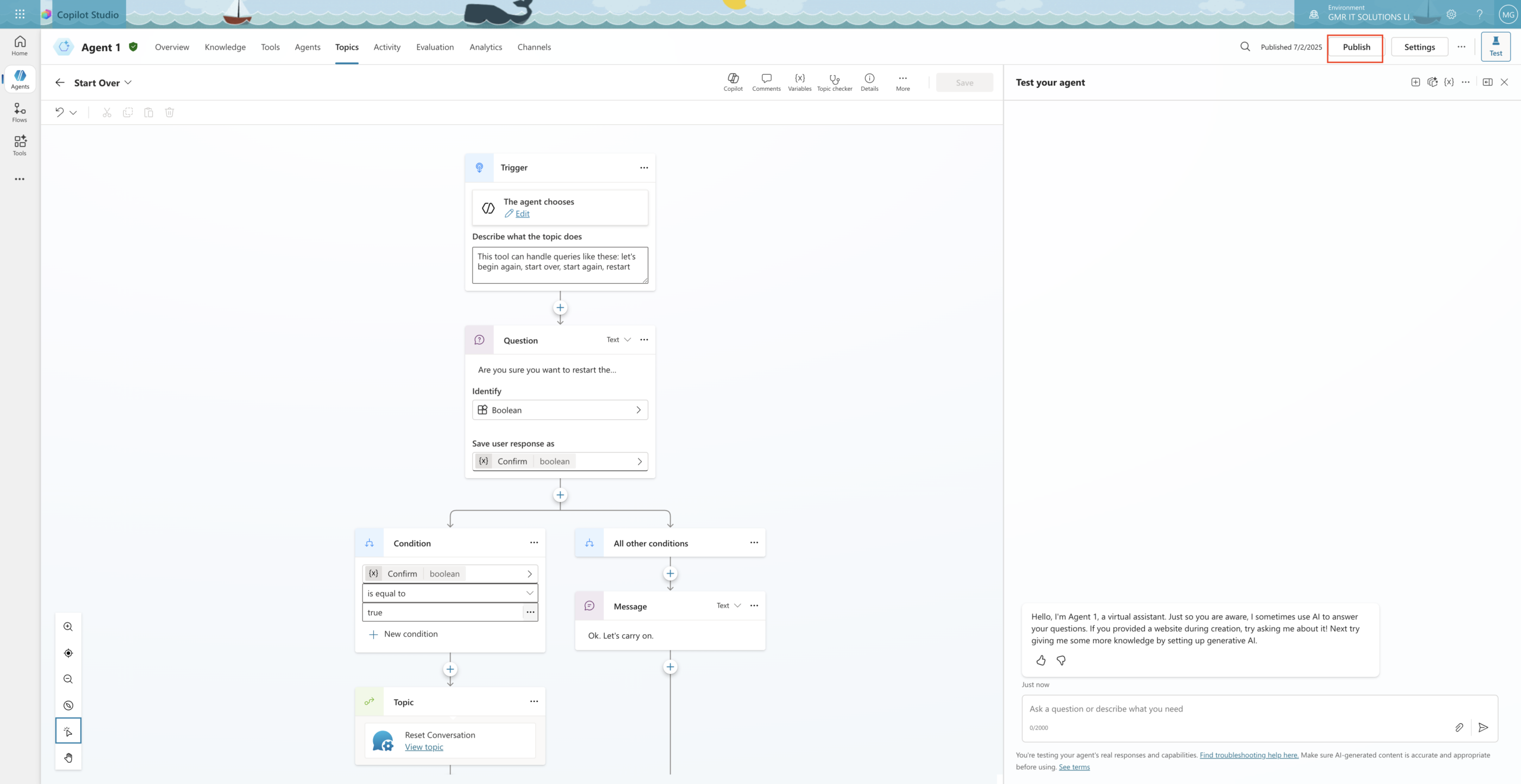
Publish: Your agent must be published for the changes to take effect.

2. Manage Localization & Translations

Content in your agent, like topic messages, does not translate automatically unless you use generative orchestration. For other content:

Download Localisation File: In the Languages Settings, select Upload for a secondary language and download the current strings in JSON or ResX format.
Translate strings: Open the file and replace the primary language text with your translated versions.
Upload Translations: Upload the modified file back to the agent’s settings.
Manual Authoring: Some elements, like Starter Prompts, must be manually authored in each secondary language directly in the canvas.

3. Language Switching Logic

You can configure how the agent decides which language to use:

Browser-Based Detection: By default, the agent tries to match the language specified in the user’s browser or client. If no match is found, it falls back to the primary language.
Dynamic Language Switching: You can create a topic that uses the User.Language system variable to switch languages mid-conversation based on user input or AI-detected intent.
Generative Orchestration: If needed, your agent can dynamically switch languages turn by turn to follow the flow of the conversation.
These guides detail how to configure Microsoft Copilot for Multilingual capabilities, covering language addition, localization and language-switching logic.

That’s it for today.

I hope this helps.

Malla Reddy Gurram aka @UK365GUY

Share this:

{How to} Use IVR with Omnichannel for customer service in Copilot Studio

Hello Everyone,

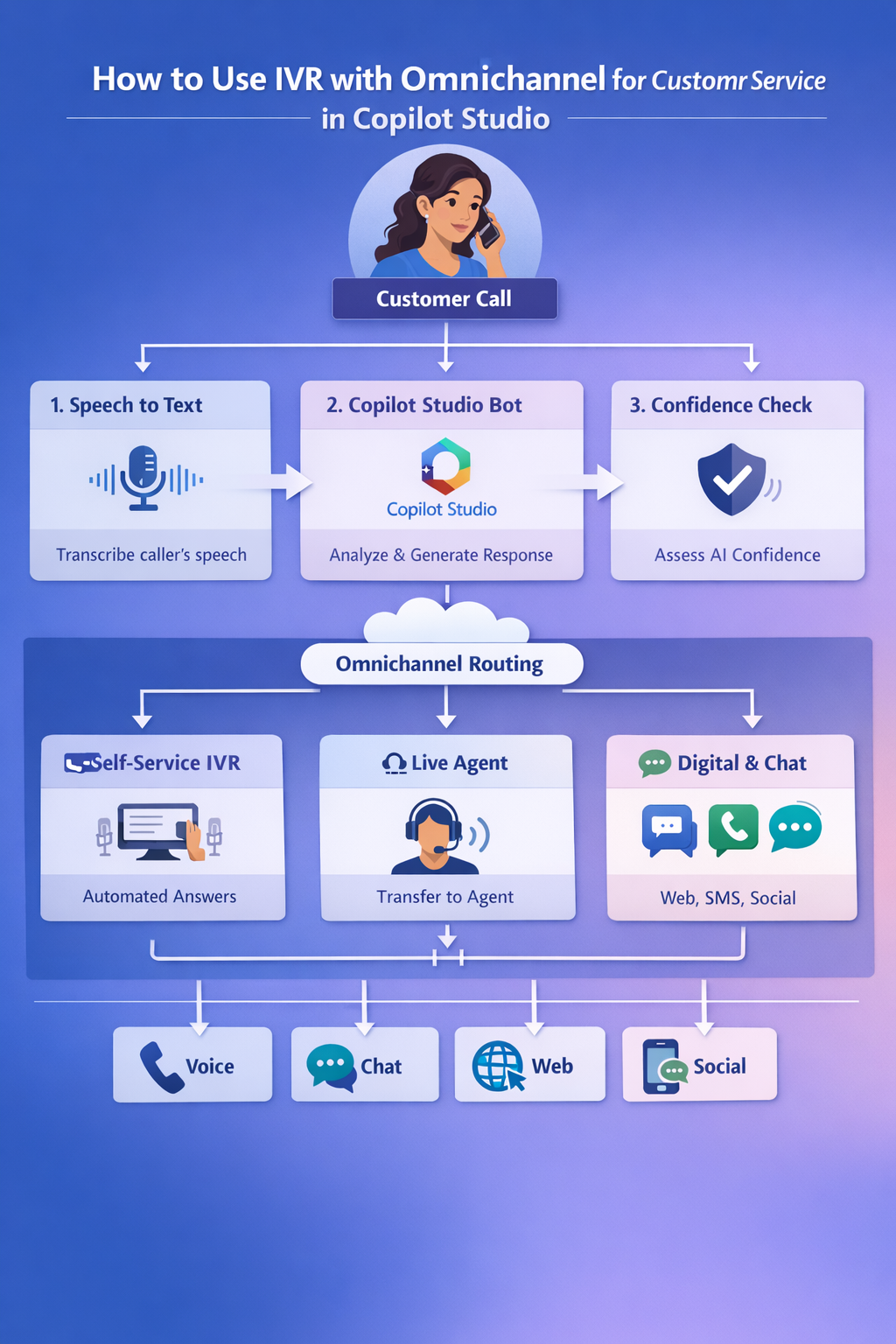
Today i am going to share my thoughts on using IVR with Omnichannel for Customer Service in Copilot Studio.

Let’s get started.

To use Interactive Voice Response (IVR) with Omnichannel for Customer Service in Microsoft Copilot Studio, you must integrate a voice-enabled agent into your Dynamics 365 environment. This allows the agent to handle phone calls, process keypad inputs, and escalate to live representatives when necessary.

Prerequisites:

Licensing: Ensure you have valid Copilot Studio and Dynamics 365 Customer Service licenses with the voice channel enabled.

Environment: Your agent and Dynamics 365 instance must be in the same geographical region.

Phone Number: Acquire a number through Azure Communication Services or use your own carrier (BYOC)

Setup Steps:

1. Configure the Agent in Copilot Studio:

1. Open your agent and navigate to Settings > Channels.

2. Select Dynamics 365 Customer Service (Under Customer Engagement Hub) and click connect.

3. Enabled Voice capabilities to allow speech recognition and DTMF (keypad) inputs.

2. Establish Handoff to Live Agents:

1. Go to Manage > Agent Transfers in Copilot Studio.

2. Select Omnichannel and enable it to ensure a seamless transition with full conversation history and variables.

3. Configure the Voice Workstream in Dynamics 365:

1. In the Customer Service Admin Centre, create a new voice workstream.

2. Link your acquired phone number to this channel.

3. Add your Copilot Agent to the workstream to act as the primary IVR.

Key IVR Capabilities:

DTMF Input: Customers can use their phone keypad for single- or multi-digit processing.

Speech Customisation: Use SSML (Speech Synthesis Markup Language) to adjust tone, pitch and speed.

Barge-in Control: Determine if customers can interrupt the agent while it is speaking.

Silence Detection: Configure the agent to handle pauses by triggering retries to reprompts.

That’s it for today.

I hope this helps.
Malla Reddy Gurram aka @UK365GUY
Share this: